DPP's Protective Umbrella Amid Governance Incapacity
By Hsia Chen, The Storm Media Commentary, July 31, 2026
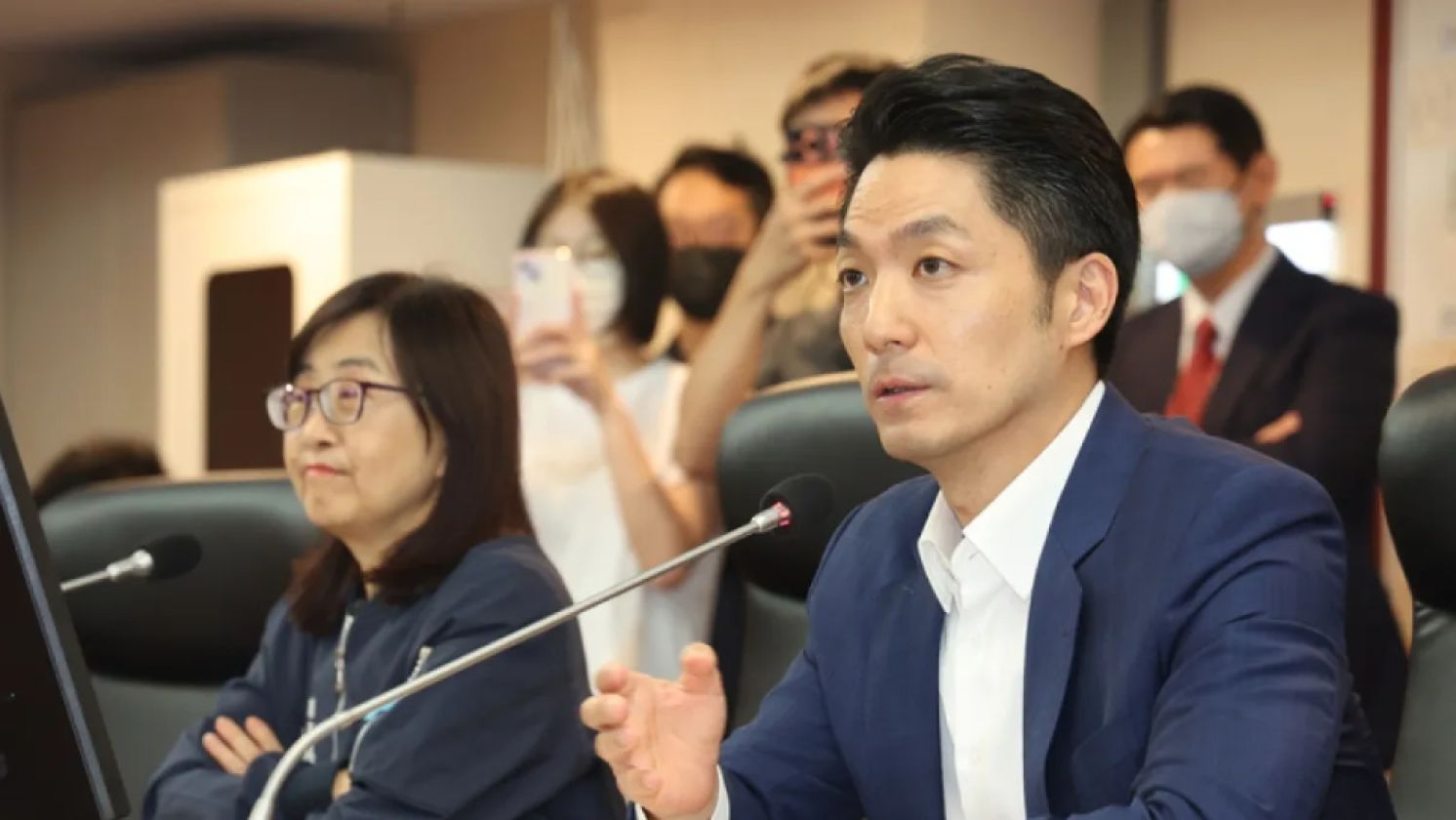
Shortly after mobilizing supporters for the July 25 protest against contaminated cooking oil, Mayor Chiang Wan-an of Taipei once again proposed a no-confidence vote against the premier. This time, however, the Kuomintang (KMT) and Taiwan People’s Party (TPP) did not rally behind his call.
It is not difficult to understand why Mayor Chiang is so enthusiastic about a no-confidence vote. Under the Republic of China’s constitutional system, such a motion is the Legislative Yuan’s ultimate means of holding the Executive Yuan accountable.
During Premier Cho Jung-tai’s first 800 days in office, his cabinet has hardly enjoyed a single day of peace. The “mass recall” campaign lasted for a year, while the Executive Yuan requested reconsideration of legislation and budget bills passed by the legislature eight times—and lost every time.
Under constitutional procedures, Premier Cho had only two options: accept the legislature’s decisions or resign. Instead, he created a constitutional precedent by doing neither. More absurdly, in addition to asking the Constitutional Court to rule on disputed legislation, Premier Cho refused to countersign the bills, preventing the president from promulgating them and government agencies from implementing them. Simply put, President Lai Ching-te has relied on Premier Cho to obstruct and effectively sideline the Legislative Yuan.
A premier who has long considered resigning and has completely lost the willingness to communicate with the legislature is himself part of the problem. Whenever controversy arises, Premier Cho sees only partisan conflict and appears to have lost the ability to understand and resolve problems.
The controversy over carcinogenic cooking oil has continued for a month, yet the government still cannot determine whether the problem originated with the raw materials or during production. No government agency has accepted responsibility or shown any willingness to do so. Other than passing a no-confidence motion, what other option is there to force such a Cabinet to step down and be reorganized?
From a political perspective, bringing down the cabinet and dissolving the legislature could instantly energize the otherwise lackluster local elections. The overall political climate would likely favor the KMT and TPP. A legislative election triggered by the no-confidence vote might not produce a political whirlwind, but it would at least create turbulence for the ruling party.
More importantly, if lawmakers were forced to seek reelection, the legislative election would be separated from the presidential election scheduled for a year and a half later. President Lai would then have to campaign for reelection largely on his own. For a KMT that currently lacks a clear presidential frontrunner, this could be relatively advantageous.
Yet what appears beneficial to the KMT could also become a major liability.
First, KMT lawmakers have only recently survived the mass recall campaign. Dissolving the legislature would force them to stand for election yet again—three elections within two years. Who could withstand that?
Second, although the Democratic Progressive Party (DPP) is clearly showing signs of fatigue after years in power, it is by no means an easy opponent. Once backed into a corner, its aggressiveness and determination would be difficult for a less battle-ready KMT to match. Calling for the dissolution and re-election of the Legislative Yuan is easy, but who can guarantee that some lawmakers would not face legal action along the way? With only four months remaining before the year-end elections, there is a 99 percent chance that Premier Cho will step down. The only question is whether he will resign to take responsibility for an electoral defeat or leave after completing a particular political assignment. Aside from humiliating Mr. Cho by making him Taiwan’s first premier to be removed through a no-confidence vote, does the Legislative Yuan really need to force him out two months early while assuming the enormous political risk of a full legislative election?
Most importantly, constitutional amendments shifted power overwhelmingly toward the executive branch. The Legislative Yuan lost the authority to approve the premier. Although lawmakers retain the power to introduce a no-confidence motion, they have no authority to decide who will become the next premier.
If the R.O.C. Constitution is a vehicle assembled from mismatched parts, its Additional Articles are an ungainly creation fitted with secondhand components. Apart from regularly scheduled elections, replacing the driver ultimately depends on that person’s conscience.
Former DPP Chairman Hsu Hsin-liang once described former President Lee Teng-hui, who led the constitutional reform process, as “a DPP member serving as KMT chairman.” After a consecutive decade of DPP rule, it has become abundantly clear that this constitutional design can render opposition oversight completely ineffective. It is indeed Mr. Lee’s “masterpiece.” Yet if he were still alive, even the former president would probably find it difficult to tolerate such an ineffective DPP administration.